Kumango Silat Ancestors from Minangkabau
Published on 25 Aug 2025
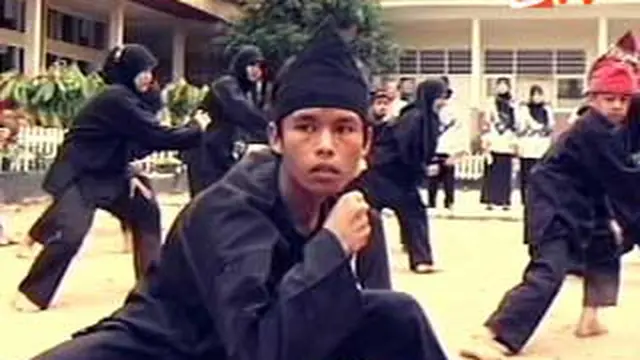
Talking about Minangkabau culture and history, we cannot leave out Tanah Datar Regency which is often called Luhak Nan Tuo. This is a realm that is believed to be the place of origin of the Minangkabau people. As a place of origin, Tanah Datar holds many historical relics, traditions, as well as cultural structures that are ingrained in the community.
Not only traditional culture, the need for self-defense skills also remains sustainable. That's why it's not difficult to find a martial arts school in this place. Silat Kumango, for example. This type of martial arts is a combination of martial arts with tarekat as well as a refinement of silats that had previously developed. The silat is designed in such a way that it is parallel to classical silat schools such as Silat Lintau, Macan, Melubus, and Pariaman.
Kumango Silat is one of ten legendary martial arts styles from Minangkabau. This silat is famous for its deadly stance called kemanga lock. In movement, there are ten core moves of Kumango. Namely, ilak kida, ilak suok, sambuik knife, rambah, chopping, ampang, lantak elbow, broken tabu, ucak tangguang, and ucak lapeh. Apart from that, there is a basic movement called the tuo step, which is a quick attacking or parrying movement that leaves the opponent without moving. There is also the ampek step, which is the development of the tuo step which serves as a decoy for the opponent.
This type of silat was designed not only as self-defense, but also combined with Islamic teachings. Regarding training time, there is a difference in philosophy between practicing in bright daylight and at night which is full of dim light. During the day, eye movement and focus can be more maintained, while at night you need to pay more attention to eye alertness and movement.
The enthusiasm of the people in Nagari Kumango in learning this type of silat continues. Not surprisingly, this nagari is a silent witness to the development of the martial arts school that was hatched by Sheikh Mudo Abdurrahman al-Khalidi in the late 1800s. The silat tradition is so strong in this nagari, the local school uses it as a sports lesson.
The Kumango type of martial arts originated from Surau Subarang, a small mosque in Nagari Kumango, Sungai Tarab District. In the past, Sheikh Abdurahman or known as Alam Baciri not only taught religion in this place but also taught martial arts to his youth at night. The habit of Minang young men in the past who preferred to stay overnight at the surau was filled by the sheikh by learning self-defense.
Sheikh Mudo Abdurrahman Al Khalidi is a man who has hot-blooded male instincts. This pioneer became a follower of the Samaniyyah and Naqsyabandiah orders. He then created these silat movements whose teachings are full of love. The teacher's fame as a martial arts teacher made him travel a lot to other areas. Sheikh spread the wings of his martial arts creations to North Sumatra, Aceh, and even to Malaysia.
Currently, Sheikh Abdurrahman's body is "laid" right next to the surau where he taught martial arts and religious knowledge. This is to remind the broadcast of his religion through the Kumango silat to future generations. Not only the tomb, the Sheikh's residence is still maintained by Kumango residents to this day as a form of love for the teacher.
Until now, Sheikh Abdurrahman's grandson, Ahmad Bakrie Burhan, still lives in Nagari Kumango, being his grandfather's martial arts elder
